Madmaze Studios Private Limited


MadShots – Sixth Edition
The Parking Spots That Appeared
Where No Car Could Fit
With nothing but street paint, Jeep turned the city of Copenhagen into a billboard for its own agility, and showed why the simplest guerrilla idea can be the most memorable.
| Campaign | "Parking Space" (guerrilla marketing campaign) |
|---|---|
| Brand | Jeep (Chrysler) |
| Agency | Bates Y&R, Copenhagen |
| Year | Spring 2007 |
| Location | Copenhagen, Denmark |
| Format | Guerrilla / Outdoor / Ambient |
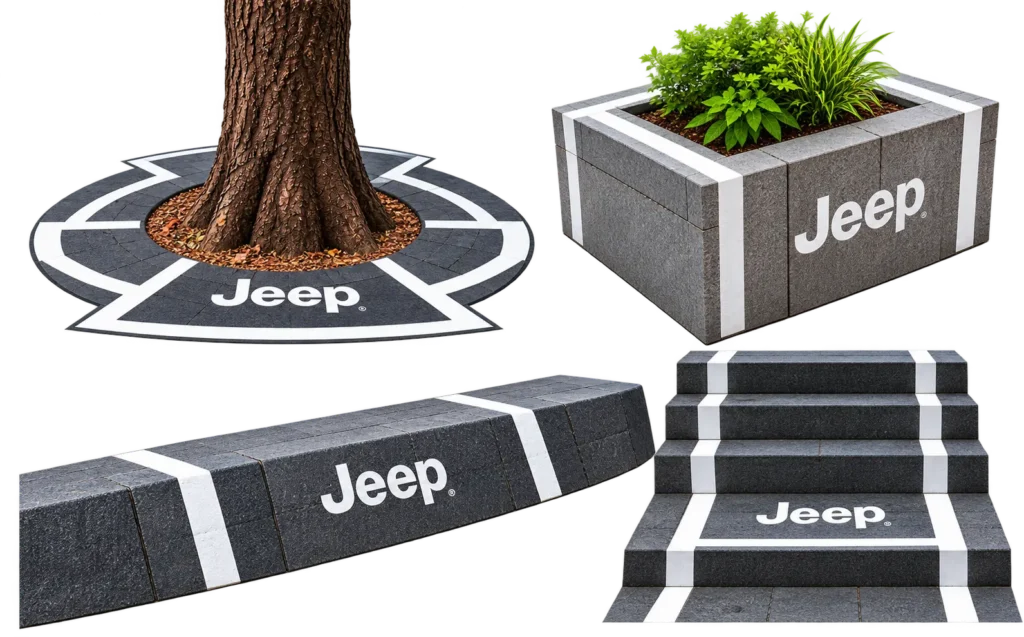
| The Idea | Mock parking spots painted on stairs, curbs, trees, and slopes, places only a Jeep could claim |
| Why It's Famous | Proved a sharp idea beats a big budget, still taught in marketing courses today |
A City Full of Impossible Parking Spots
Imagine walking through your city and spotting a perfectly painted parking space. Nothing odd about that, until you notice where it is. On a flight of stairs. Wrapped around a tree. On top of a planter box. Squeezed onto a patch of pavement no sensible driver would ever attempt.
Each one carried a small Jeep logo. And that was the point: where an ordinary car saw an obstacle, a Jeep saw a parking spot. The premise was simple: a Jeep could claim the places nothing else could reach.
No television budget. No celebrity. Just paint, wit, and a city turned into a stage. This was Jeep's "Parking Space" campaign, and nearly two decades on, it still shows up in guerrilla marketing lectures worldwide.
The Setup: A Big Brand, A Small-Budget Idea
Selling agility without saying a word
In spring 2007, Jeep (then under Chrysler) wanted to make a point in Copenhagen, Denmark: its compact vehicles were nimble and easy to maneuver in a crowded city. That is hard to sell with a conventional ad. Every car brand claims good handling, and words on a billboard rarely convince anyone.
So Jeep's agency, Bates Y&R Copenhagen , took a different route. Rather than tell people the Jeep could fit anywhere, they decided to show it, using the city itself as the canvas. The whole concept rested on a single, playful insight.
The Insight: Show, Don't Tell
Put the product in its natural habitat.
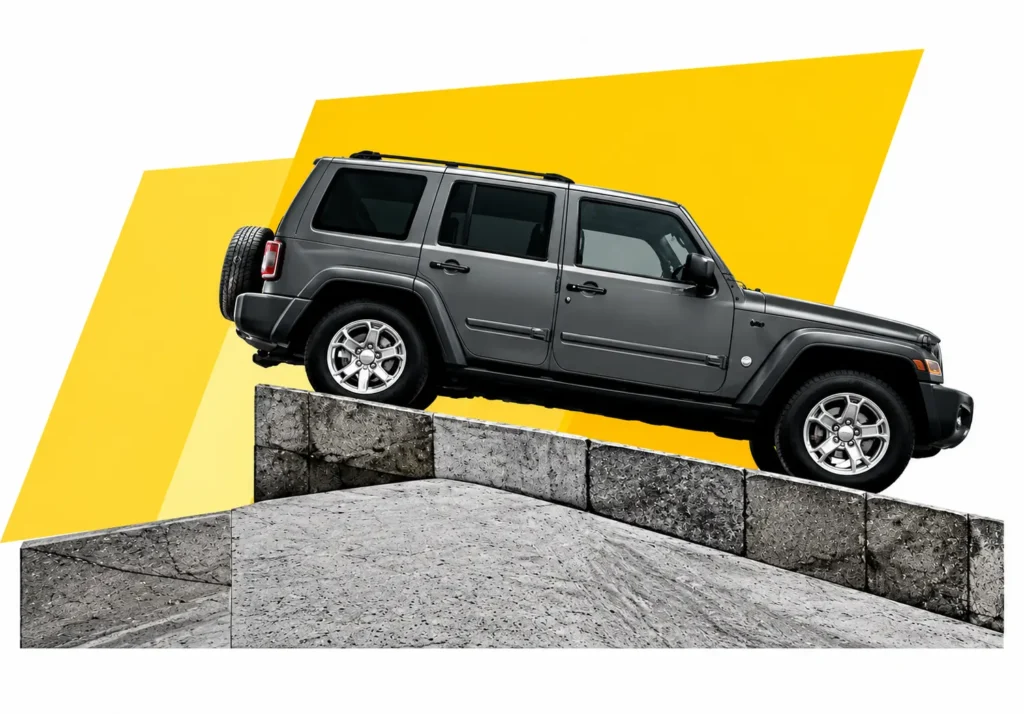
A Jeep's selling point was that it could handle terrain and tight spaces that defeat ordinary cars. Most brands would show that with a slick film of a car climbing a mountain. Jeep did the opposite, bringing the claim down to street level, into the exact environment where its customers actually drive and park. The spots were meant to suggest a Jeep could park on all kinds of terrain, so the "impossible" spaces appeared right in the middle of the city.
By painting parking bays in absurd, impossible spots, Jeep made a visual argument without a single line of ad copy. The message assembled itself in the mind of anyone who walked past: if a Jeep can claim this spot, it can handle anything. It was experiential marketing at its most economical; the idea lived in the street, and the audience completed it themselves.
The Idea: The City as a Canvas
Simple paint, surprising places
Over a few weeks in spring 2007, Bates Y&R marked out mock Jeep parking spaces across Copenhagen:
- On and across public staircases and steep curbs
- Wrapped around the base of trees
- On top of planter boxes and street furniture
- On uneven slopes and narrow surfaces no standard car could use
The execution was deliberately low-tech: ordinary street paint, the kind used for real parking bays, applied where a bay had no business being. That contrast, official-looking markings in ridiculous locations, is what made people stop, look twice, and talk.
Because the spots looked semi-official, they created a genuine double-take. And because each carried the Jeep logo, the brand got the credit the moment the penny dropped.
Why It Worked: Four Principles Behind the Paint
A lesson in doing more with less
Since this was a 2007 guerrilla campaign, Jeep never published formal figures like impressions or sales uplift, and no verified award is on record. What the campaign is remembered for, and still taught for, is the strength of its thinking. Four principles stand out.
It showed instead of told
Jeep took its core claim, agility and maneuverability, and demonstrated it rather than asserting it. A painted spot on a staircase makes the point faster and more memorably than any tagline could. Demonstration beats description every time.
It used the environment as the medium
Instead of buying space on a billboard, Jeep turned the city’s own streets, steps, and trees into the ad. The context was the message. This is the essence of what an experiential event management company does best: build the brand idea into the physical world people already move through, so discovery feels like a surprise rather than an interruption.
It was cheap and high-impact
The campaign needed little more than paint and permission. In an industry where car advertising routinely runs into millions, Jeep proved a sharp idea outperforms a big budget. Guerrilla marketing rewards creativity over spend, and this is one of its cleanest examples.
It invited conversation
The spots were made to be noticed, photographed, and discussed. Even the mild controversy, a few passersby grumbling that Jeep was “encouraging” bad parking, only fueled the chatter. A campaign people argue about is a campaign people remember.
The Catch: Clever Comes With Caveats
When a joke is taken literally
No campaign is flawless, and this one drew its share of criticism. Some people read the painted spaces literally, and worried Jeep was endorsing parking in pedestrian zones, on steps, or in other genuinely unsafe places.
It is a fair reminder for any brand attempting guerrilla work: the sharper the execution, the greater the chance someone takes it at face value. Taken in the lighthearted spirit it was meant to be, the campaign landed exactly as intended. It was a visual wink, not a driving instruction, and the public reaction was amusement and intrigue.
The Bigger Picture
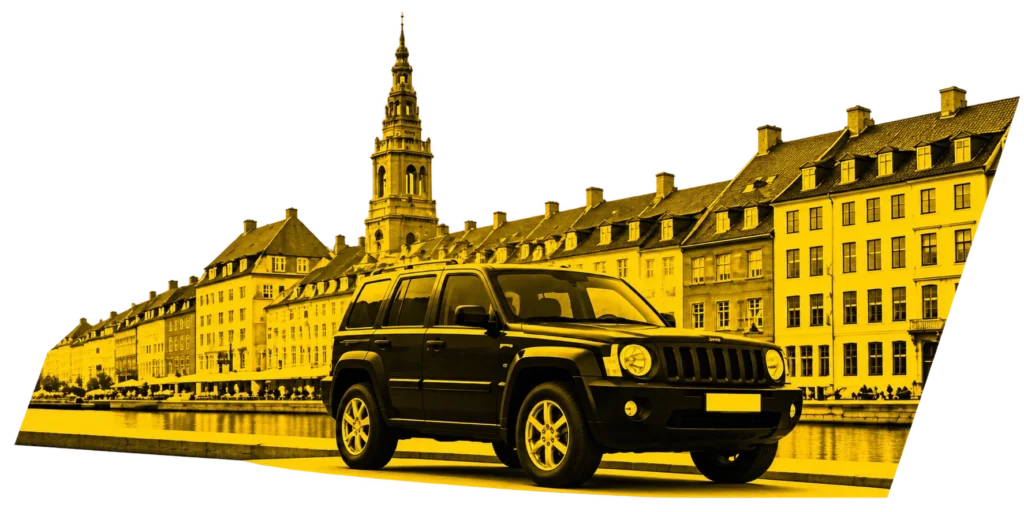
Jeep's "Parking Space" has outlived most of the expensive campaigns that ran alongside it in 2007, and the reason is instructive. It relied on no production budget, media weight, or technology, just a single clear idea, executed with wit, in the exact place its audience lived.
That is the enduring appeal of great guerrilla and experiential work. When the idea is strong enough, the city does the advertising for you, and the people who walk past become the ones who spread it.
Madmaze Take: Jeep's genius here was restraint. It resisted the urge to explain, and trusted a single visual gag to carry the whole message. The street became the medium, and the passerby became the storyteller. That is how we think as an experiential marketing agency: the strongest ideas do not shout from a billboard; they show up where people already are and let them discover the brand for themselves. Find the simplest way to show your truth, then put it where the world will trip over it.